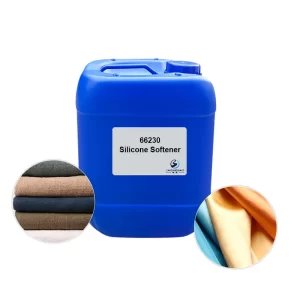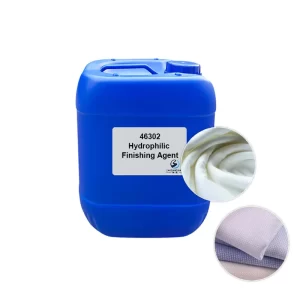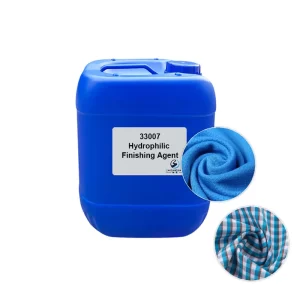


میں textile finishing process, soft handle and hydrophilicity are always two key indicators that engineers in dyeing mills need to balance. For cotton, wool and various blended fabrics, customers not only hope that the fabric feels soft, fluffy and comfortable, but also pay more and more attention to the water absorption speed, wearing experience and subsequent using performance of the fabric.
But in actual production, the problem that “the softer, the less hydrophilic” is not uncommon. Although some traditional soft finishing system can obviously improve the handle of fabrics, it may influence the water absorption of fabrics. Conversely, if hydrophilicity is overly emphasized, it may result in too hard handle and lacking fluffiness on fabrics.
For dyeing mills’ bosses, this means that customer demands are becoming increasingly complex, but production costs and quality risks should not be increased simultaneously. And for purchasing staff, different fabrics require different نرم کرنے والے, which will bring more SKU and inventory pressure. For engineers, it means more small sample tests, formula adjustments and bulk cargo tracking.
Therefore, a hydrophilic softener can balance hydrophilicity, softness, fluffiness, stability and environmental protection requirement is becoming a more practically valuable solution in the field of textile finishing.
Why Does Traditional Soft Finishing Easily Affect Hydrophilic Performance?
One of the main functions of softener is to reduce the friction on fiber surface and give fabric softer and smoother handle. But in some finishing system, when the soft components form a relatively obvious cover on fiber surface, the contact between water and fibers may be affected, thereby decreasing the water absorption rate of fabric.
This is particularly worthy of attention in towels, knitted fabrics, sportswear, home textiles and some underwear.
For example, after soft finishing process, a cotton fabric has very soft handle, but its water absorption test cannot meet customer’s requirement. Or decrease the dosage of softener to improve hydrophilicity, and finishing the handle is not soft enough.
This contradiction between “softness” and “hydrophilicity” not only affects the final product quality, but also increases the difficulty for dyeing mill engineers to adjust their processes.
Dyeing Mills’ Bosses Are More Concerned about Overall Production Cost
From the perspective of dyeing mill operation, the value of a ختم کرنے والا ایجنٹ is not merely the handle in the laboratory.
After truly entering mass production, enterprises still need to consider whether the products are easy to use, whether different orders can be switched quickly, whether inventory overstock is likely to occur, and whether there will be rework due to abnormal processes.
If cotton, wool and blended fabrics respectively require different softeners, enterprises will need to stock more products, which not only increase the procurement management work but also raise the inventory occupation.
If a hydrophilic softener can cover multiple fabrics and adapt to different finishing processes, dyeing mills can reduce some product SKU and simplify the auxiliary managing system.
For larger overseas dyeing mills, the value brought by such “general purpose” product is often not only reflected in per kilogram unit price of auxiliaries, but also in inventory, production switching and process management efficiency.
For Purchasing Staff, What Does True Versatility Mean?
The purchasing department usually has to simultaneously deal with costs, stability of supply, product quality and customers’ requirements for environmental protection.
If the same product can be used in کپاس, wool and different types of blended fabrics, the quantity of purchased products can be reduced, and the inventory management pressure can be decreased at the same time.
In addition, exhaust process and padding process are the two common processes in textile finishing. For dyeing mills that need to serve different production lines and various customer orders simultaneously, whether the products can adapt to multiple application methods is also an important factor to consider when choosing auxiliaries.
A hydrophilic softener with good versatility enables enterprises to conduct product testing and process switching without significantly changing their existing production systems.
Why Softness, Fluffiness and Hydrophilicity Should Be Concerned Simultaneously?
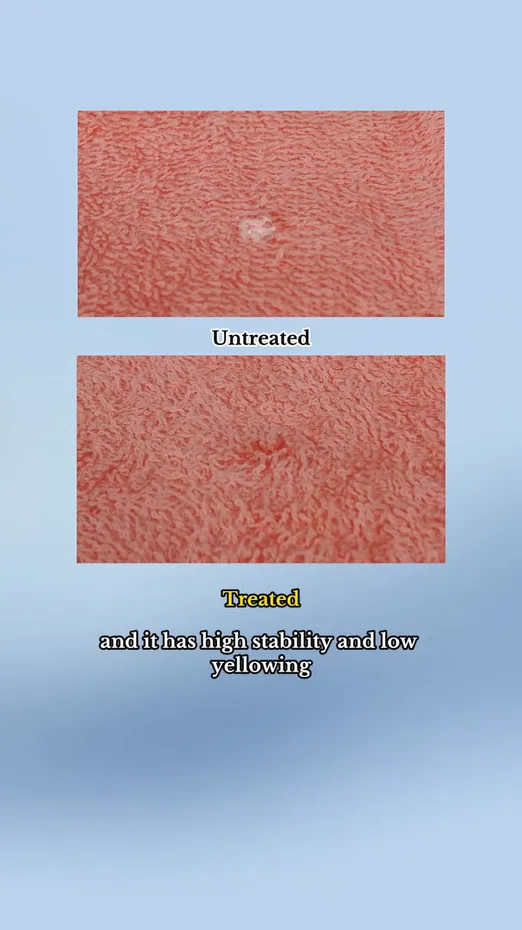
The requirements for handle on modern textiles are becoming increasingly refined.
For garment fabrics, consumers hope that the fabric is soft, comfortable and has a natural fluffiness. For towels, they require the fabric is soft and can absorb water quickly. For sports and functional fabrics, moisture absorption and comfort in use are equally important.
Therefore, “softness” is no long the sole goal of finishing.
Ideal hydrophilic and soft finishing should achieve that: after treated, fabrics not only have soft, fluffy and un-sticky handle, but also keep good hydrophilicity, so that the fabrics still perform well in water absorption tests and actual use.
This is also an important idea to solve the common problem of “softness ≠hydrophilicity” in the industry.
Low Yellowing Is Especially Important to White and Light-colored Fabrics
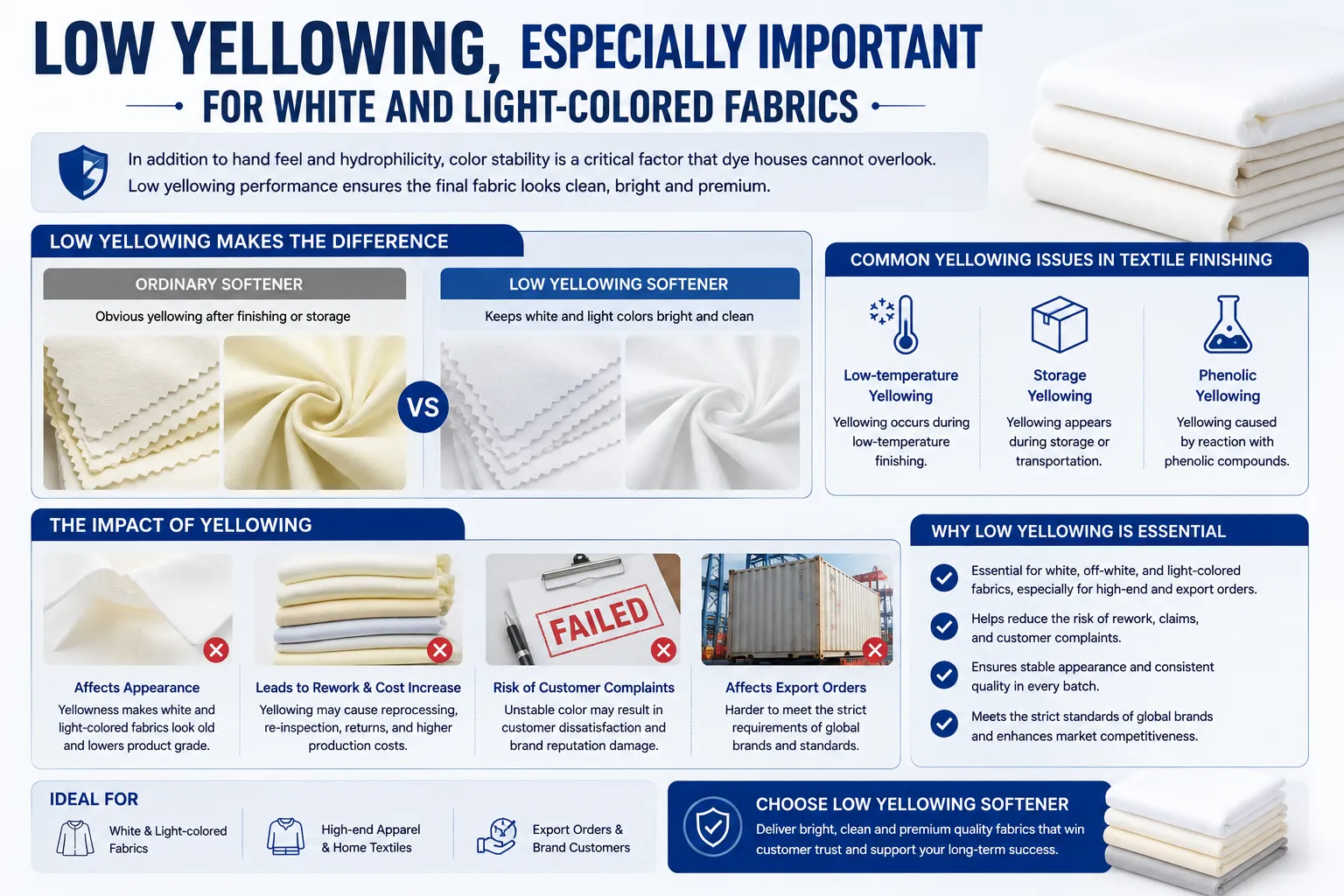
Expect for handle and hydrophilicity, color stability is also a problem that dyeing mills should not ignore.
For white, creamy white, light-colored and high-quality export orders, the yellowing caused by finishing agents may directly affect the appearance of final product. If there is low-temperature yellowing, storage yellowing or phenolic yellowing, the risks of rework, re-finishing and even customer complaints may increase.
Thus, when choosing hydrophilic softener, low yellowing and low phenolic yellowing performance are of great significance for light-colored products.
Especially when overseas dyeing mills take on brand orders, the products not only need to meet customers’ requirements for handle and functionality, but also need to maintain a stable appearance. Reducing the risk of yellowing can help enterprises minimize the uncertainties in finishing process.
In Mass Production, the Stability on Machine Is More Important Than Small Sample Effect
Many engineers in dyeing mills are well aware that although laboratory samples can make an ideal handle, it does not guarantee the smooth production of bulk goods.
In the actual production process, fabric types, equipment status, water quality, bath ratio, concentration of working solution and processing method may all affect the final effect.
If the softener has oil floating, silicone spots or differences in handle between batches during the production process, it will increase the difficulty in on-site adjustment.
Especially in the continuous production of garment washing and mass production, higher requirements are put forward for the stability of finishing agents.
Therefore, when choosing hydrophilic softeners, it not only needs to observe their softness and hydrophilic effects, but also should pay attention to whether the product is easy to be operated on machine, whether the process adaptability is good, and whether the mass production can remain stable.
For dyeing mills’ bosses, stability means fewer rework and production depletion. For engineer, it means fewer exception handling and repeated debugging.
Environmental Compliance Has Become an Important Requirement for Export Orders
For textile enterprises targeting the international market, environmental compliance has gradually evolved from an “added bonus” to an important requirement in supply chain audits.
Especially for overseas brand orders, in addition to product performance, customers may also pay attention to the environmental attributes of ٹیکسٹائل کیمیکل and whether they meet the relevant international market requirements.
Therefore, choosing products that do not belong to AEEA fatty acid condensates system and meet international textile industry’s environmental protection requirements is more conducive to enterprises serving brand orders and export customers.
This can not only help dyeing mills to reduce the pressure of supply chain audits, but also enhance the product competitiveness of textile chemical distributors when facing overseas customers.
35246: Achieves a Better Balance among Hydrophilicity, Softness And Fluffiness
Aiming at the practical pain points of traditional softeners in terms of hydrophilicity, versatility and bulk goods stability, BLUELAKECHEM Hydrophilic Softener 35426 offers a more comprehensive finishing option.
According to product technology data, 35246 is mainly composed of ester quaternary ammonium salt compounds. It can be applied in the soft finishing for cotton, wool and their blends. And it is suitable for garment washing process. It can improve the handle and using performance of fabrics, and impart fabrics hydrophilic, soft and fluffy finishing effect.
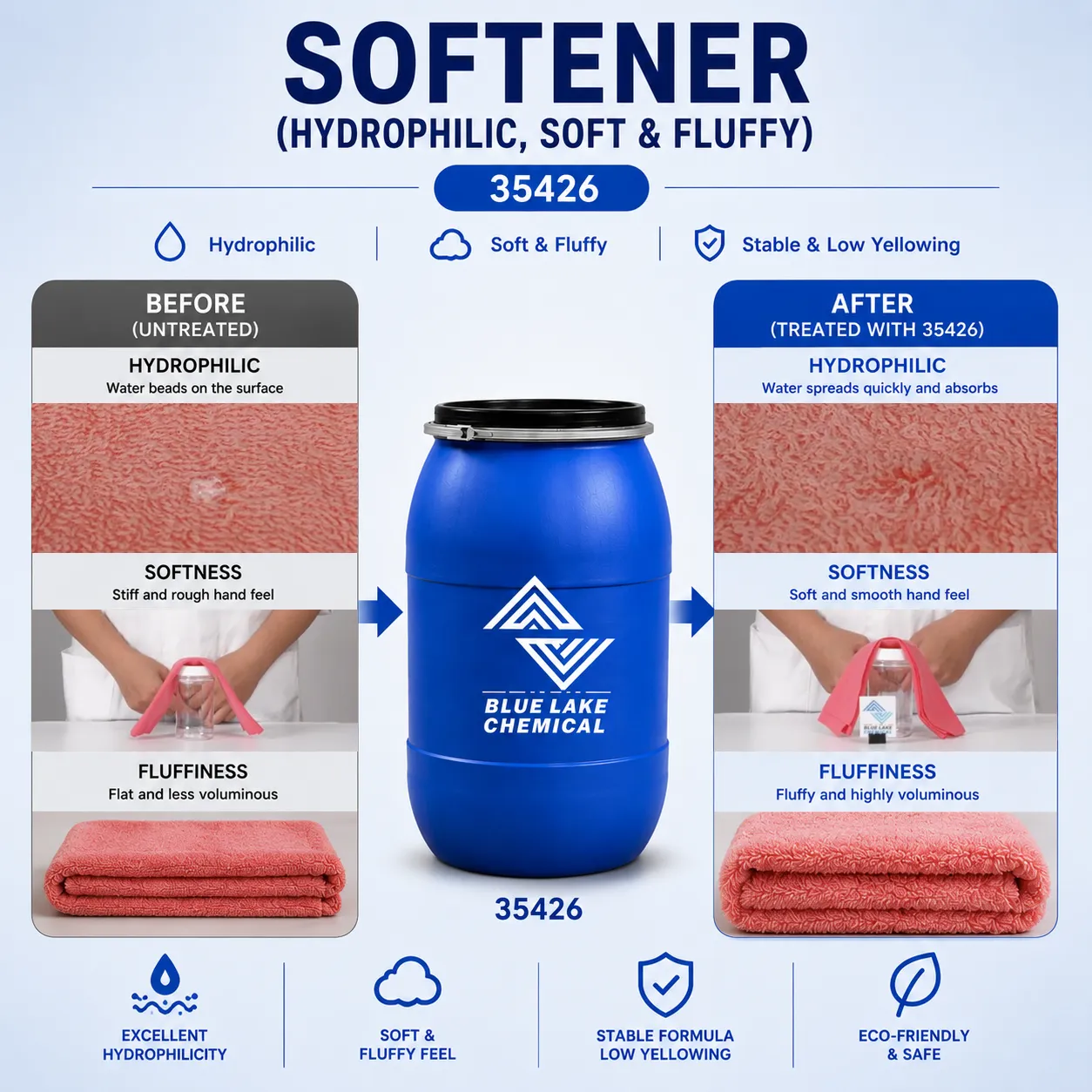
In terms of product performance, 35426 has good versatility and wide application range. It also has good hydrophilicity and soft and fluffy handle, as well as the characteristics of low yellowing and low phenolic yellowing. It is suitable for padding process and exhaust process both.
For dyeing mills, the value of 35426 lies not only in improving handle, but also in helping enterprises to strike a balance between softness and hydrophilicity. According to its product positioning, it can be used for cotton, wool and blended fabrics, and is suitable for hydrophilic and soft finishing for ready-to-wear garments, piece goods, towels and yarns, etc.
In practical application, 35426 is a high-concentration product. The technical data suggests diluting it to 5% – 15% before use, and the actual dosage should be adjusted according to the specific fabric and finishing requirements. In reference process, dosage of exhaust process is 3~10% (o.w.f.) (by 10% dilution), and the dosage of padding process is 30~100 g/L (by 10% dilution).
At the same time, 35246 does not belong to AEEA fatty acid condensates. It complies with the international environmental protection standards and relevant requirements of textile industry, which is more suitable for brand orders and export-oriented textile enterprises.
For overseas dyeing mills, textile factories and textile chemical distributors, if they hope to reduce softener SKU, lower inventory pressure, and at the same time take into account the softness, fluffiness and hydrophilicity of the fabric, 35426 can be chosen as a test option in the existing finishing system.
بلیولیکیکم has been focusing on ٹیکسٹائل معاون اور ٹیکسٹائل کیمیکل solutions, serving overseas dyeing mills, textile mills and textile chemicals distributors. Our products cover multiple applications, as قبل از علاج, رنگنے, ، نرم ختم کرنا and functional finishing, etc. By integrating actual production demands, BLUELAKECHEM is committed to providing textile auxiliaries solutions that balance handle, functions, process stability and environmental protection تطبیق. For different fabrics, equipment and production processes, it is recommended to conduct laboratory test and on-site test before the formal mass production to confirm the optimal dosage of product and process conditions.