

In textile dyeing and finishing production, it is an important factor to affect the effects of pretreatment, dyeing and finishing whether dyes, auxiliaries and various treatment solutions can quickly and evenly contact with fabric and fully enter the fiber structure.
For overseas dyeing mills, the same mill often needs to deal with fabrics with different fibers, different organizational structures and different gram weight, and also needs to adapt to different production methods such as exhaust dyeing, padding dyeing and continuous finishing, etc. When the fabric wetting speed is slow, the spread of the treatment solution is insufficient, or the penetration of dyeing solution is uneven, even if the dye formula itself has no obvious problem, it may still bring additional process adjustment pressure to subsequent production.
The common problems include:
- The fabric absorbs water slowly, making it difficult for the treatment liquid to quickly penetrate the fabric
- The dye solution is distributed on fabric surface unevenly, and there are differences in the local liquid absorption rate
- The speed at which dyes and auxiliaries enter the fibers is insufficient
- The wetting and penetration of fabrics with high density and high gram weight are slower
- During continuous production, the time of fabric contacting the treatment solution is limited
- During dyeing process, there will easily occur uneven color absorption and color difference
- The repeatability and stability of the process between different batches are affected
Therefore, wetting agent is not just to simply “make the fabric wet”, but to create conditions for dyes, auxiliaries and other chemicals to enter the fibers more fully by improving the contact, wetting and spreading conditions between the treatment liquid and the fabric.
Why Is the Wetting Agent Needed in Dyeing and Finishing Process?
During the pretreatment, dyeing and finishing processes, chemicals first need to come into contact with fabric surface, and then gradually enter the fiber structure through wetting and penetrating.
If the surface tension of the treatment liquid is relatively high, or the fabric itself has a slow liquid absorption rate, the spread of the liquid on fabric surface may be affected. This situation may be more obvious for fabrics with tight structure, high gram weight or slower liquid absorption rate.
When the treatment liquid cannot come into contact with the fabric quickly and evenly, it may further affect the distribution of dyes and auxiliaries on fabric.
Therefore, textile bahan pembasah usually needs to take into account the following aspects:
- Improve the wetting speed of fabric
- Decrease the surface tension of treatment liquid
- Improve the ability of spreading and wetting of treatment liquid
- Promote dyes and auxiliaries to fully contact with fibers
- Have good emulsifying performance
- Keep good compatibility with other pencelupan dan finishing auxiliaries
- Keep proper foaming level in actual production equipment
For engineers in dyeing mill, the role of the wetting agent is not to merely alter the original dyeing formula, but to improve the conditions for the treatment cairan to enter the fabric, enabling the dyes and auxiliaries in the existing process to function more fully.
Why Do Dyeing Mills Need Different Types of Wetting Agents?
The production conditions in different dyeing mills are not exactly the same.
Some mills mainly adopt normal exhaust dyeing process and need to pay attention to the wetting, penetration and low foaming performance of the products. And some mills adopt continuous padding dyeing and exhaust dyeing process, the contact time between fabric and treatment liquid is limited, so that they need to pay more attention to quick wetting ability.
In addition, the concentration and usage methods of different products will also affect the choices in actual production.
For example, high-concentration products can reduce the volume pressure during transportation and storage of the products, but at the same time, the existing dilution, metering and production equipment conditions of the mill also need to be taken into consideration. Therefore, the selection of wetting agent cannot be simply based on product price or concentration as the sole criterion for judgment. Instead, a comprehensive assessment should be made in combination with fabric type, equipment conditions, process methods, and actual usage requirements.
What Aspects Should Be Considered When Choosing A Wetting Agent?
Firstly, the type of fabric
The wetting and liquid absorption properties of different fabrics are different.
For cellulose fabrics such as cotton and viscose fiber, as well as fabrics with tight structure, high gram weight or slow liquid absorption rate, the wetting speed and liquid absorption performance of the wetting agent on the actual fabric should be tested with emphasis.
Secondly, production process
The requirements for penetration performance in exhaust dyeing and continuous padding dyeing are not exactly the same.
During exhaust dyeing process, one can focus on observing the liquid absorption rate of fabric, the distribution of dyeing solution, and the uniformity of the final dyeing. And in continuous padding dyeing and padding processes, it is necessary to pay attention to whether the fabric can quickly wet and absorb the treatment solution within the limited contact time.
Thirdly, wetting and penetrating ability
This is one of the most crucial indicators when choosing a wetting agent.
Dyeing mills can make actual fabric sample tests to compare the wetting time, liquid absorption speed, liquid spreading effect and processing evenness of different products, rather than merely judging based on product names or theoretical performance.
Fourthly, compatibility with existing formula
Modern dyeing mills usually use multiple surfactants and dyeing and finishing auxiliaries simultaneously.
Therefore, in addition to focusing on the penetration effect, it is also necessary to test whether the product can maintain good bath stability and compatibility with other auxiliaries after added to the existing formula.
Fifthly, foaming situation
For high-speed and continuous dyeing and finishing production, the control of foaming is also a problem that needs to be considered in practical applications.
Low-foaming wetting agents are conducive to reducing the pressure of control of foaming during the production process. Therefore, low-foaming performance is also an indicator that dyeing mills should pay attention to when choosing products.
How to Choose 11060 and 11026 According to Dyeing Mill’s Requirement?
For purchasing personnel and dyeing mill engineers, they can have a preliminary judgment first based on the product concentration, usage conditions and production requirements.
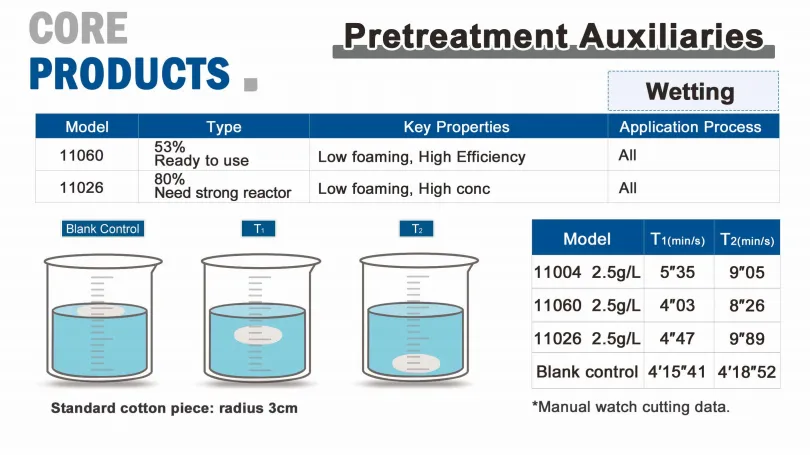
| Item No. | Product Concentration | Product Features | When Choosing, Pay More Attention to |
| 11060 | 53% | Low foaming. High efficiency. Has good wetting and penetration performance | Compatibility with normal dyeing and finishing production, wetting efficiency, using method and formula |
| 11026 | 80% | Low foaming. High concentration. | High-concentration product system, equipment condition and actual using method. |
In actual production, it is recommended to conduct comparative tests based on your own fabrics and processes rather than simply comparing the product concentration.
Experimental test: Wetting and penetration performance of different wetting agents
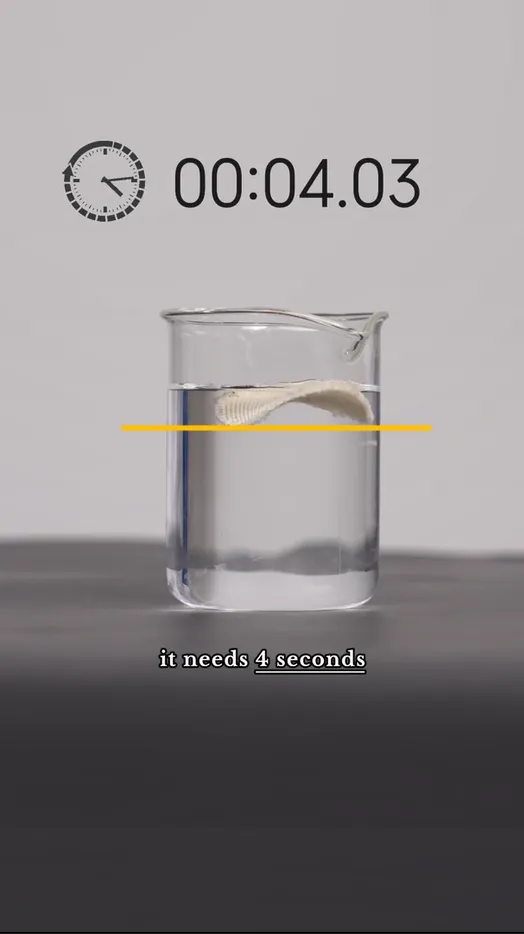
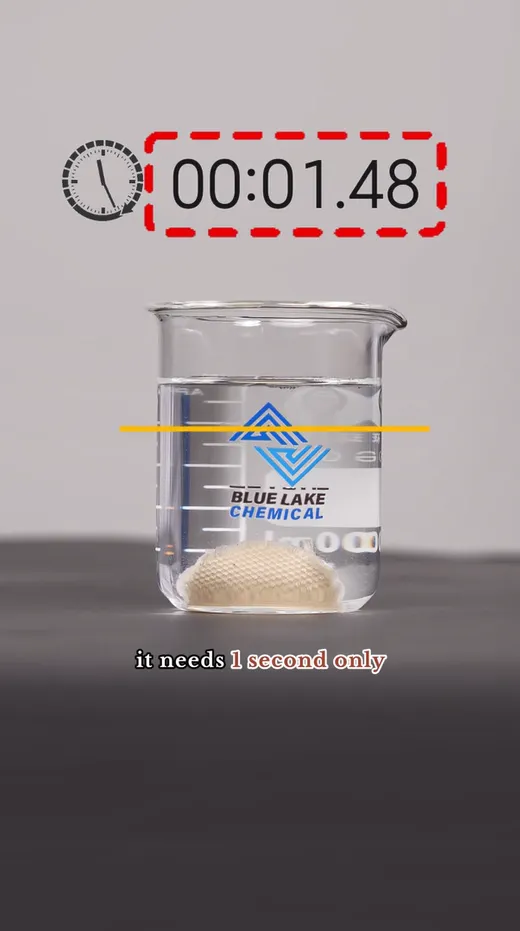
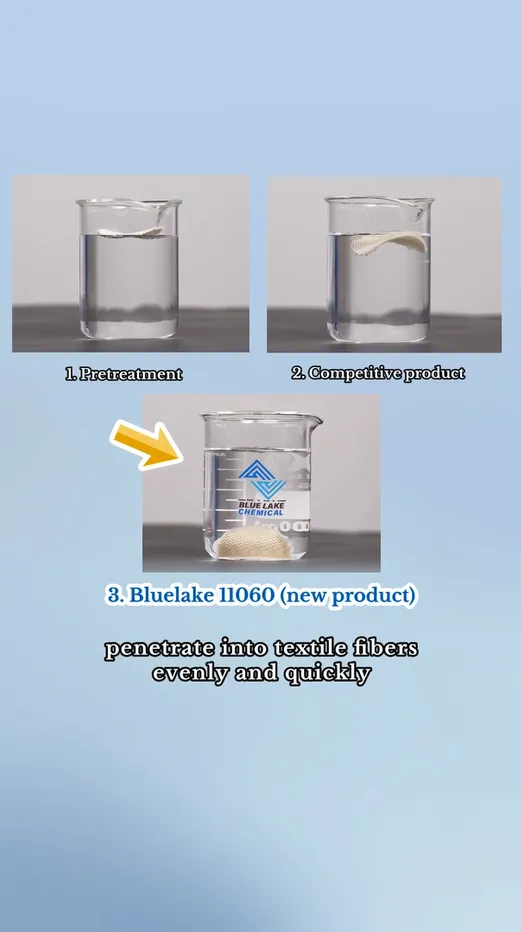
In product testing, the time and position changes of the treatment solution entering the fabric can be observed through standard fabric samples, thereby comparing the actual wetting and penetration performance of different wetting agents.
In the test data you provided, it uses standard cotton fabrics for the test, and set up blank control. At the same time, the two test times for different products were recorded. The test results show:
- 11060: T₁ is 4 minutes 3 seconds. T₂ is 8 minutes 26 seconds
- 11026: T₁ is 4 minutes 47 seconds. T₂ is 9 minutes 89 seconds
- At the same time, set up a blank control for comparison.
BLUELAKECHEM Wetting Series: Choose According to Product Concentration and Production Conditions
At present, BLUELAKECHEM’s wetting series mainly include two products, as 11060 and 11026.
Both products have low foaming, but there are differences in product concentration and using methods.
Therefore, in the actual selection, it is not simply about judging which product is better, but rather choosing a more compatible product based on the factory’s equipment conditions, product using methods, and specific production processes.
11060: High-concentration & Low-foaming Wetting Agent
The concentration of 11060 is 53%. It can be used directly. It is low-foaming and high-efficiency.
According to product technology data, 11060 is mainly composed of isomeric alcohol polyoxyethylene ether. It can act on the surface of the solution through hydrophilic and lipophilic groups, so as to decrease the surface tension of the solution and thereby improving the permeability of the treated solution.
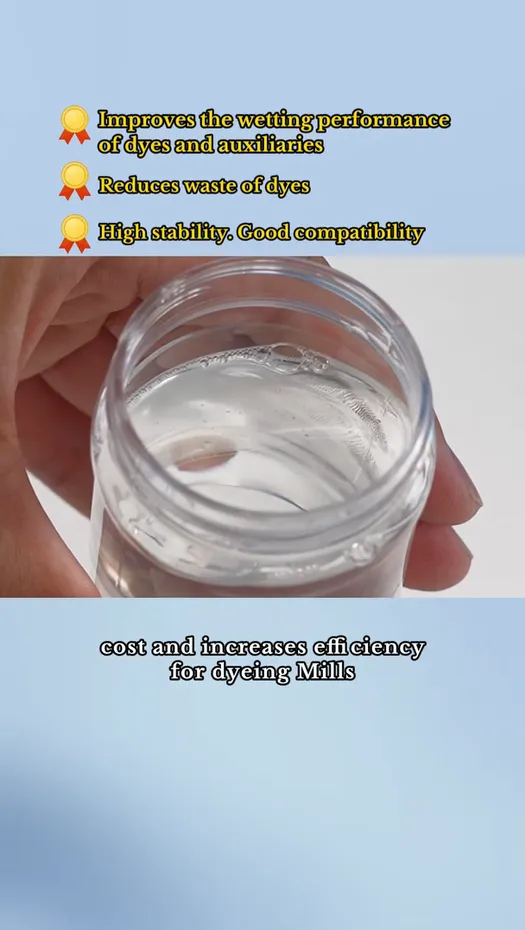
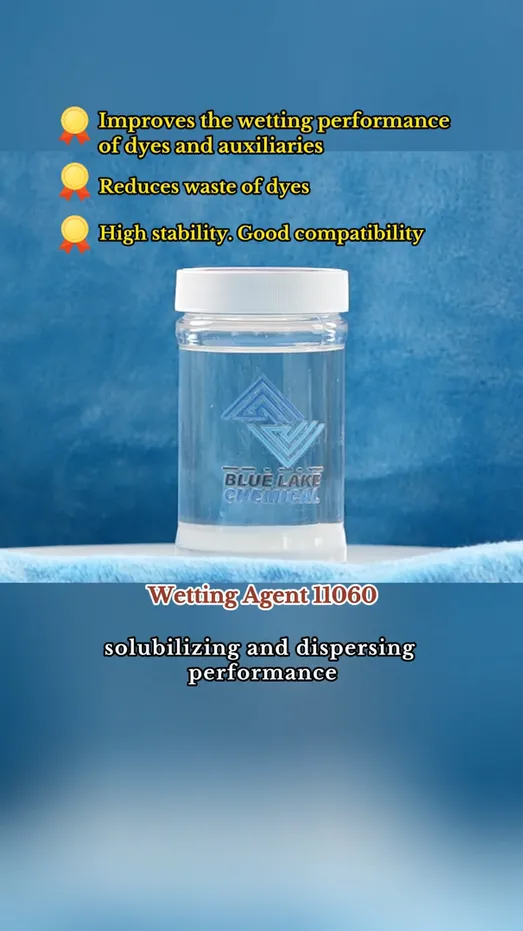
At the same time, 11060 has good wetting and emulsifying functions. It has good stability and compatibility. It can be applied in textile pretreatment, dyeing and finishing process.
For application, if the dyeing mill is currently mainly facing the problems such as slow fabric wetting speed, insufficient spread of treatment liquid, or hoping to improve the contact conditions between dyes and auxiliaries and fabrics, the application performance of 11060 can be tested through actual fabric samples.
Main Features of 11060
- Improve the wetting and penetrating performance of treatment liquid.
- Promote dyes and auxiliaries to fully contact with fabrics.
- Have good emulsifying performance.
- Have good stability and compatibility.
- High concentration. Low foaming.
- Nonionic. Soluble in water.
- Can be used in pretreatment, dyeing and finishing.
According to technology data, 11060 is suggested to dilute with softened water by 1:2~1:3. In exhaust process, the reference dosage of diluted 11060 is 1 ~ 3 g / L. In padding process, the reference dosage of diluted 11060 is 5 ~ 10 g / L. For actual production dosage, it needs to be adjusted according to fabrics, equipment and specific process.
11026: 80% High-concentration & Low-foaming Wetting Agent
The concentration of 11026 is 80%. It is also low-foaming. It has higher concentration than 11060.
According to technology data, 11026 is mainly targeted at production applications that have demands for high-concentration product systems. For it is high-concentration, in actual using, it needs to match with the equipment condition and operating methods in the factory.
For dyeing mills that already have the corresponding equipment conditions and wish to use high-concentration product systems, actual fabric tests can be conducted to compare their wetting speed, penetration performance, and compatibility with existing formulas.
Therefore, there is not a simple superiority or inferiority relationship between 1026 and 11060. Instead, it can be selected based on product concentration, equipment conditions, usage methods, and specific production requirements.
Shift from the Selection of One Single Wetting Agent to A Complete Dyeing and Finishing Application Solution
For overseas dyeing mills, what really needs to be solved is not merely “which wetting agent to choose”, but rather how to make the treatment solution contact with the fabric more stably and evenly, and form a good compatibility with the existing dyeing and finishing formulas.
From pretreatment to dyeing, and then to finishing, wetting and penetration conditions will all affect the contacting state between chemicals and fabrics.
If the fabric absorbs liquid slowly or the treatment liquid does not spread sufficiently, the engineer may need to further adjust the process parameters. Therefore, when choosing a wetting agent, it is more important to conduct targeted tests according to different fabrics, equipment and production conditions.
For different positions, their focus of the issue are different:
Dyeing mill’s boss:
Focus on production stability, consistency of product quality and overall processing efficiency.
Purchasing staff:
Focus on product concentration, actual adding amount, using method, formula compatibility and unit fabric using cost.
Dyeing mill’s engineer:
Focus on wetting speed, penetrating effect, distribution of dye solution, foaming and compatibility with the existing process.
Finally, whether the wetting agent is suitable for the production process should be judged through comparative tests on actual fabric and equipment, rather than being selected merely based on theoretical performance or purchase price.
BLUELAKECHEM: Provide Pretreatment Auxiliary Solution for Global Textile Enterprises
BLUELAKECHEM focuses on the research and development, production and application of bahan pembantu kimia tekstil, providing textile dyeing and finishing auxiliaries and application support for overseas dyeing mills, textile manufacturing enterprises, textile chemical traders and distributors.
Our products cover multiple series, as alat bantu pretreatment, dyeing processing auxiliaries, functional finishing agents, silicone oil and softener. We can provide corresponding product options according to different fabrics, equipment and dyeing and finishing processes.
If you have the problems in your production, such as slow fabric liquid absorption, insufficient penetration of treatment liquid, limited wetting time in continuous process, or if you wish to improve the contact effect between dyes and auxiliaries and fabrics, you can test BLUELAKECHEM wetting series products in combination with actual fabric and process conditions.
BLUELAKECHEM can provide sample testing based on fabric type, production equipment, existing process and specific application requirements provided by the customer. Through comparison test in actual production conditions, we can help to evaluate the matching degree more accurately between different products and existing process.