

में textile finishing process, the water absorption, moisture wicking and quick-drying performance on fabrics are closely related to the inherent characteristics of fibers and the finishing process.
Especially for towels, sportswear, functional clothing and various kinds of textiles with high requirement for moisture absorption, relying solely on the water absorption performance of the fabric itself is often difficult to meet the requirements of different end products for wearing comfort and functional performance.
If the fabric still has problems such as insufficient hydrophilicity, slow water absorption or slow moisture dissipation after dyeing and processing, it may manifest as:
- Fabric absorbs water slowly
- Towels do not absorb water quickly enough
- Fabric surface is left water easily
- Moisture dissipation speed on sports fabrics is slow
- After absorbing water, the drying speed is slow
- The functional finishing effects of different fiber fabrics are different
- The finishing formula needs to be readjusted according to different terminal uses
Therefore, for dyeing mills and finishing enterprises, functional finishing is not simply adding a “hydrophilic agent”, but is select a more suitable finishing product according to the fabric fibers, final use and the required functional performance.
Why Do Textiles Need Moisture-absorbing, Hydrophilic and Quick-drying Finishing?
The surface properties of different fibers are different. After dyeing, washing and other processing, the final water absorption and moisture transfer performance of fabrics will also differ.
For highly water-absorbing products such as towels, etc., the key point might be to enable the fabric to contact with and absorb moisture more quickly. For sportswear and functional fabrics, it may need to focus more on the transfer of sweat or moisture on the fabric surface and the subsequent drying speed.
Therefore, in functional finishing, it needs to determine the finishing direction based on the using requirements of the final product.
Generally speaking, we can pay attention to the following aspects:
- Hydrophilicity: Improve the fabric’s ability to contact with moisture.
- Moisture absorption: Help fabrics to absorb water better.
- Moisture transfer performance: Promote the moisture in fabric to transfer outside.
- Quick-drying performance: Shorten the time required for the fabric to getting drier from a moist state.
- Durability: For products need to be washed repeatedly, it needs to pay attention to keep the finishing effect.
- Handle: Functional finishing should not only focus on a single indicator but also take into account the final handle of the fabric and the using requirements.
Therefore, although there is relation among “hydrophilicity”, “moisture wicking” and “quick drying”, they are not exactly the same function.
For engineers in dyeing mills, when choosing a product, it is necessary to first clarify which performance needs to be improved ultimately, and then make targeted tests based on the type of fabric.
Why Do Different Fabrics Need Different Moisture Wicking Agents?
Different fibers have different structures and surface characteristics, also have obviously different requirements for finishing agent.
For example, the finishing direction of cellulose fiber fabrics and polyester fabrics are not exactly the same.
From BLUELAKECHEM’s current product series, some products are mainly applied in fabrics of cellulose fibers and their blended, some are suitable for polyester and its blends, and some can cover more types of fabrics.
At the same time, all of them are to improve hydrophilicity. Some products emphasize instant hydrophilicity, some emphasize durable hydrophilicity, and others are mainly aimed at moisture wicking or quick drying.
Therefore, if the same functional finishing agent is used for all fabrics, it is difficult to balance different production demands.
For dyeing mills, the more reasonable method should be based on:
Fabric fiber → Final use → Required functions → Requirement of durability → Finishing process
to gradually choose the product.
What Should the Dyeing Mills Pay Attention to When Choosing A Moisture Wicking Agent?
Firstly, clarify the type of fabric fibers
It is the basis to choose a functional finishing agent.
Different product has different application fabric.
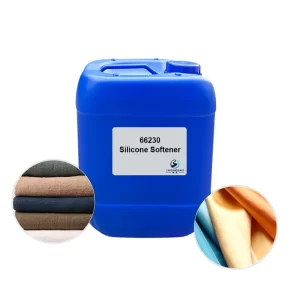
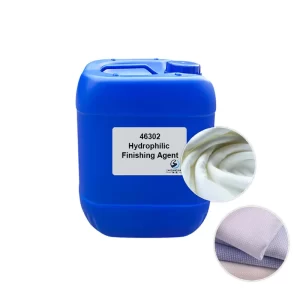
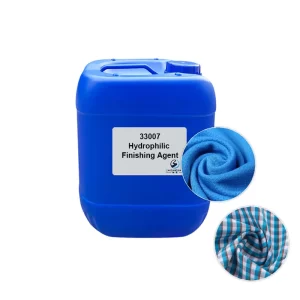
For example, 63081 is mainly applied in cellulose fibers and their blends. 45404 and 33007 are used for polyester and its blends. 46302 and 66230 cover the cellulose fibers, nylon and their blends.
Thus, purchasing personal needs to clarify what type of fabric the factory mainly produces first, and then further choose the corresponding products.
Secondly, clarify the final function required to improve
Not all customers need the same function.
Towel may require rapid water absorption and hydrophilic effect. Sportswear may require moisture wicking and water transfer performance. Some functional fabrics may pay attention to drying speed.
Therefore, when choosing a product, it needs to clarify the customer’s order requirement.
Thirdly, instant hydrophilicity or durable hydrophilicity?
Some finishing agents are used to achieve instant hydrophilic effect. But some products emphasize that they still keep hydrophilic performance after washed.
For single-use products or those with high requirements for instant water absorption, choosing instant hydrophilic products may be more appropriate.
If the products need to be used for long time or washed for several times, it needs to pay attention to the durability of finishing effect.
Fourthly, does it need to take into account both moisture wicking and quick drying?
Moisture wicking and quick drying are exactly not the same indicator.
If the fabric can absorb moisture, it does not mean that the moisture can certainly dissipate and dry.
Therefore, for sportswear and functional clothes, etc., in addition to focusing on hydrophilicity, it needs to further check the moisture-wicking and quick-drying performance according to customer’s requirements.
Fifthly, whether the finishing agent is matched with the existing process or not?
The functional समापन अभिकर should finally enter the dyeing mill’s existing finishing process.
Therefore, when choosing a product, it needs to combine:
- fabric type
- finishing equipment
- padding or other finishing method
- product using method
- existing finishing formula
- customer’s requirement for durability of the function
and then finally determine the appropriate products and using conditions through actual sample testing.
How to Choose a Suitable Moisture Wicking Agent according to Dyeing Mill’s Requirement?
Purchasing personal and dyeing mill’s engineer can first have a preliminary screening according to the fabric type and required functions:
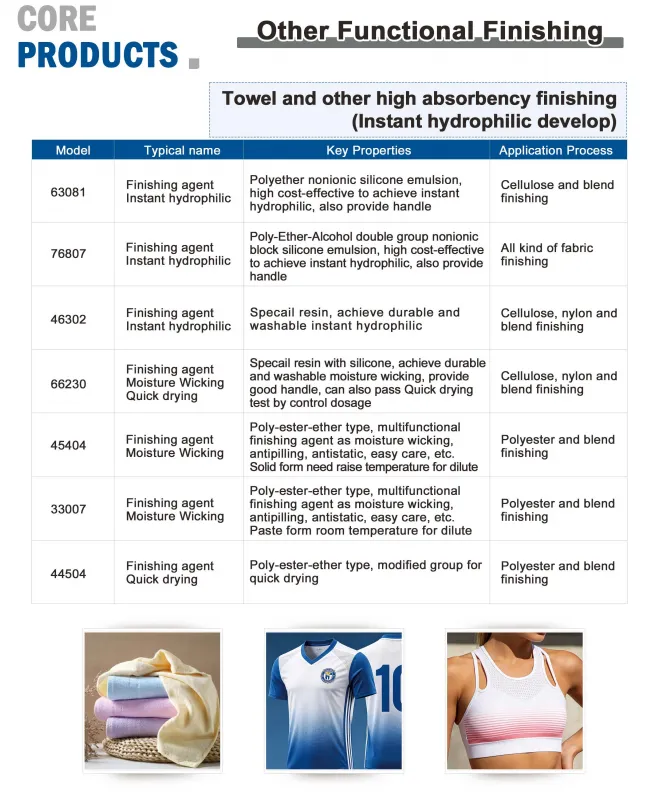
| Main Production Requirement | Product Item No. | Important Function |
| Instant hydrophilicity of cellulose fibers and their blends | 63081 | Instant hydrophilicity, handle |
| Instant hydrophilicity of multiple fabrics | 76807 | Instant hydrophilicity, handle |
| Washable hydrophilicity of cellulose fibers, nylon and their blends | 46302 | Durable, washable and instant hydrophilicity |
| Moisture wicking of cellulose fibers, nylon and their blends | 66230 | Moisture wicking, quick drying |
| Multi-functional finishing of polyester and its blends | 45404 | Moisture wicking, anti-pilling, anti-static, easy to maintain and care |
| Multi-functional moisture-wicking finishing of polyester and its blends | 33007 | Moisture wicking, anti-pilling, anti-static, easy to maintain and care |
| Quick drying of polyester and its blends | 44504 | Quick drying |
BLUELAKECHEM Moisture-wicking and Hydrophilic Finishing Series: Aiming at Different Fabrics and Functions
BLUELAKECHEM’s functional finishing products are not single hydrophilic finishing agents, but have series according to different fabrics and functional requirements.
From the current product information, this series includes different functions, as instant hydrophilicity, durable hydrophilicity, moisture wicking and quick drying, etc., and at the same time covers cellulose fibers, nylon, polyester and blended fabrics.
Therefore, dyeing mill can choose the relative item number product according to the function of final product.
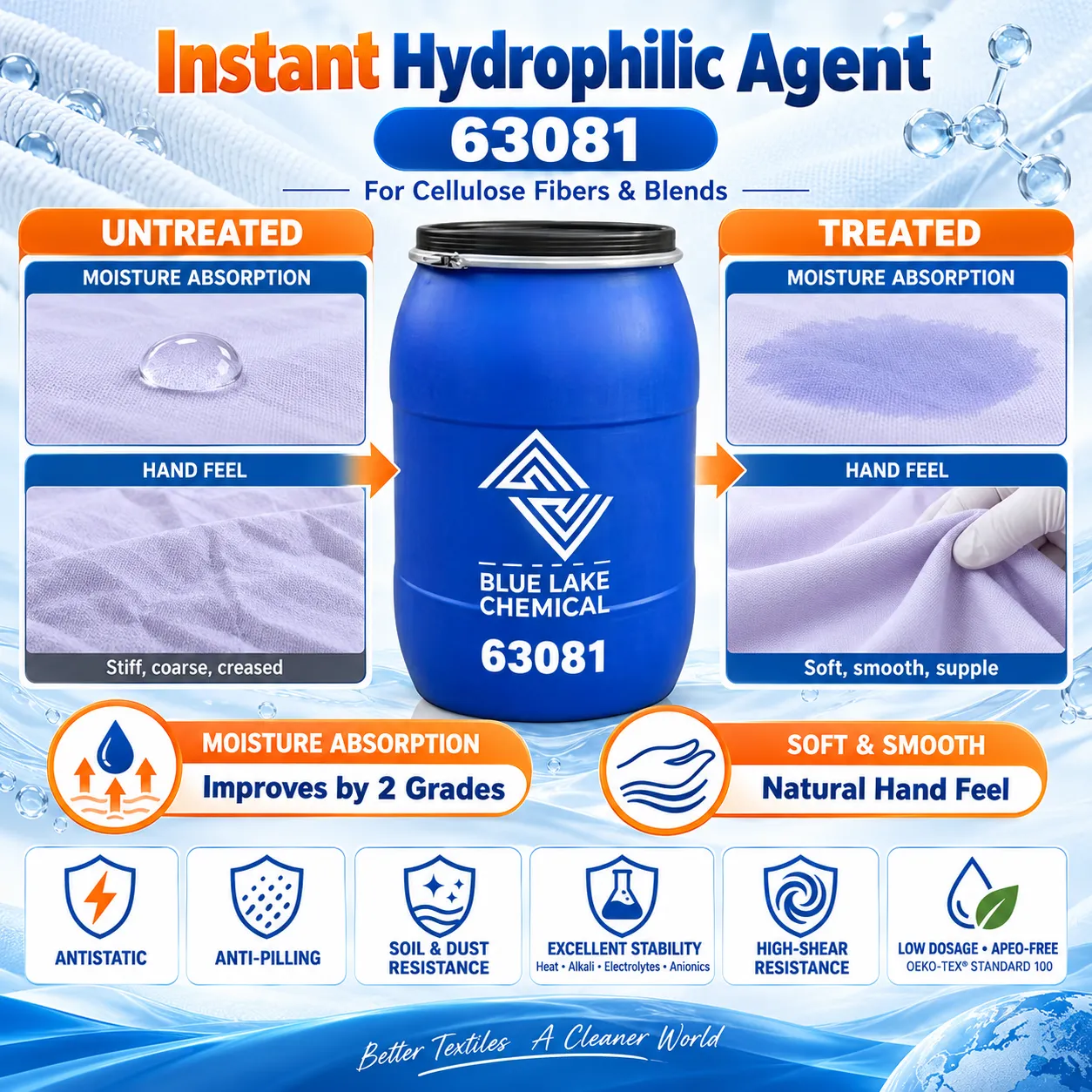
63081: Instant Hydrophilic Finishing of Cellulose Fibers and Their Blends
The typical name of 63081 is instant hydrophilic finishing agent which is mainly applied in the finishing of cellulose fibers and their blends.
In the product information, this product is polyether nonionic silicone emulsion which can achieve instant hydrophilic effect and provide a certain handle.
Therefore, for dyeing mills that mainly produce cellulose fibers and their blended fabrics and whose customers are particularly concerned about the instant hydrophilicity of the fabrics, 63081 can be tested as a priority.
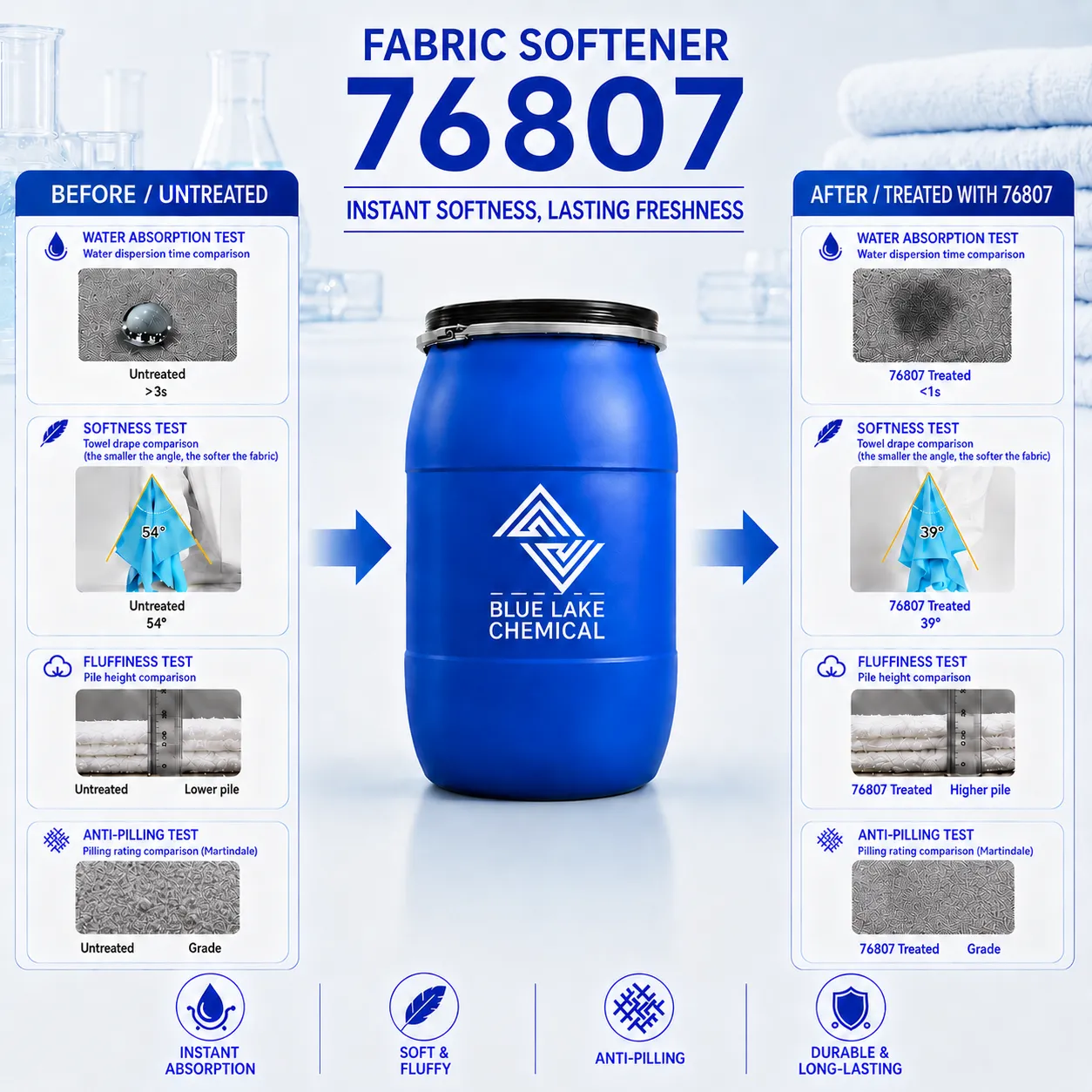
76807: Suitable for Instant Hydrophilic Finishing of Various Kinds of Fabrics
76807 is also instant hydrophilic finishing agent. It has wide application. It can be used for the finishing of various kinds of fabrics.
This product is polyether-alcohol double-base nonionic block silicone emulsion. It mainly emphasizes the instant hydrophilic effect as well as the handle.
For dyeing mills that produce a wide variety of fabric types and hope to use instant hydrophilic finishing products with a wide application range, they can make tests based on specific fabrics.
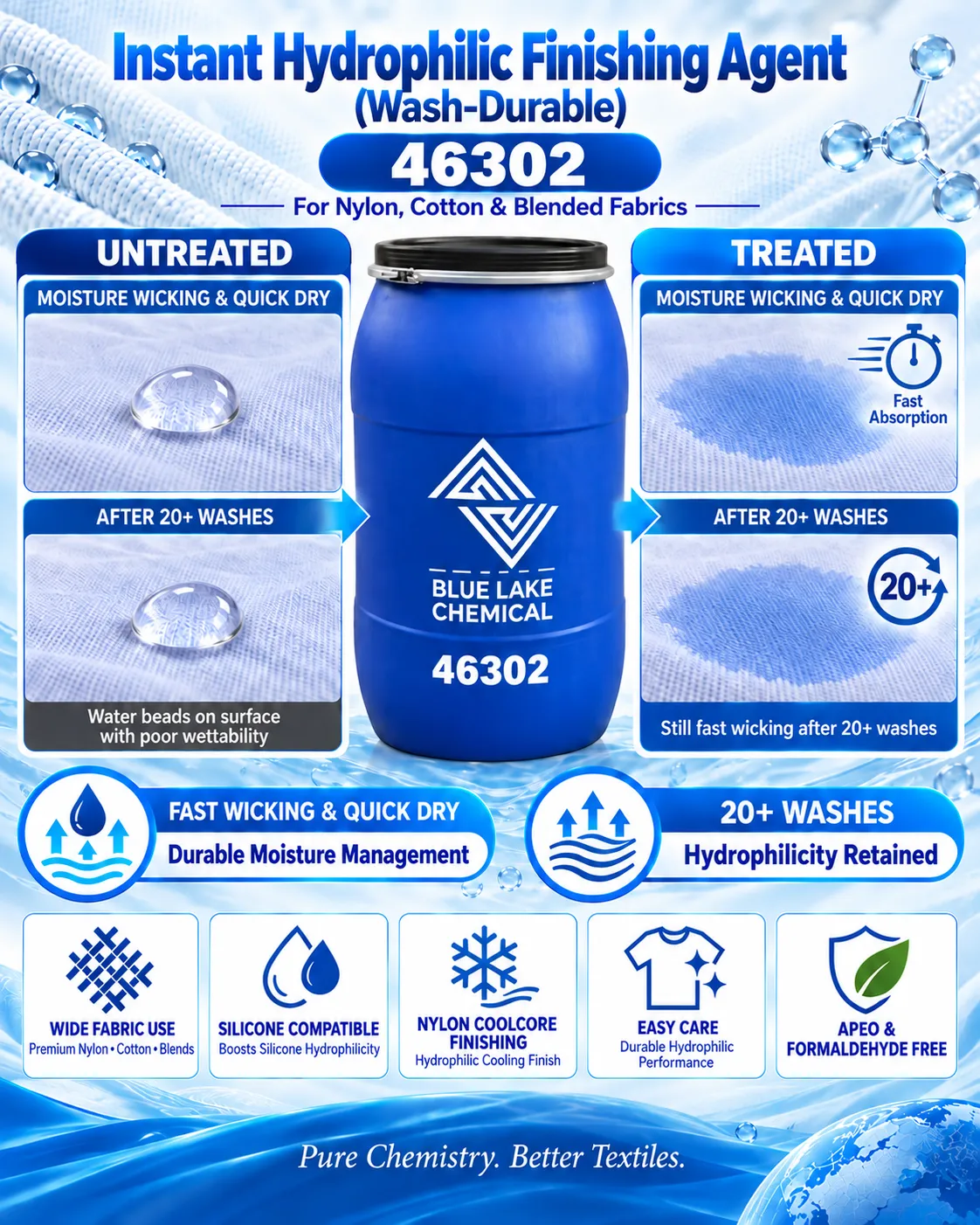
46302: Durable Hydrophilic Finishing
46302 is also instant hydrophilic finishing agent. But it is different from the previous two products. The product data is especially emphasized the durable and washable instant hydrophilic effect.
Application includes:
- Cellulose fiber fabrics
- Nylon fabrics
- Cellulose fiber and nylon blended fabrics
Therefore, for customers not only focus on instant hydrophilicity, but also required to keep function after washing, they can pay more attention to 46302.
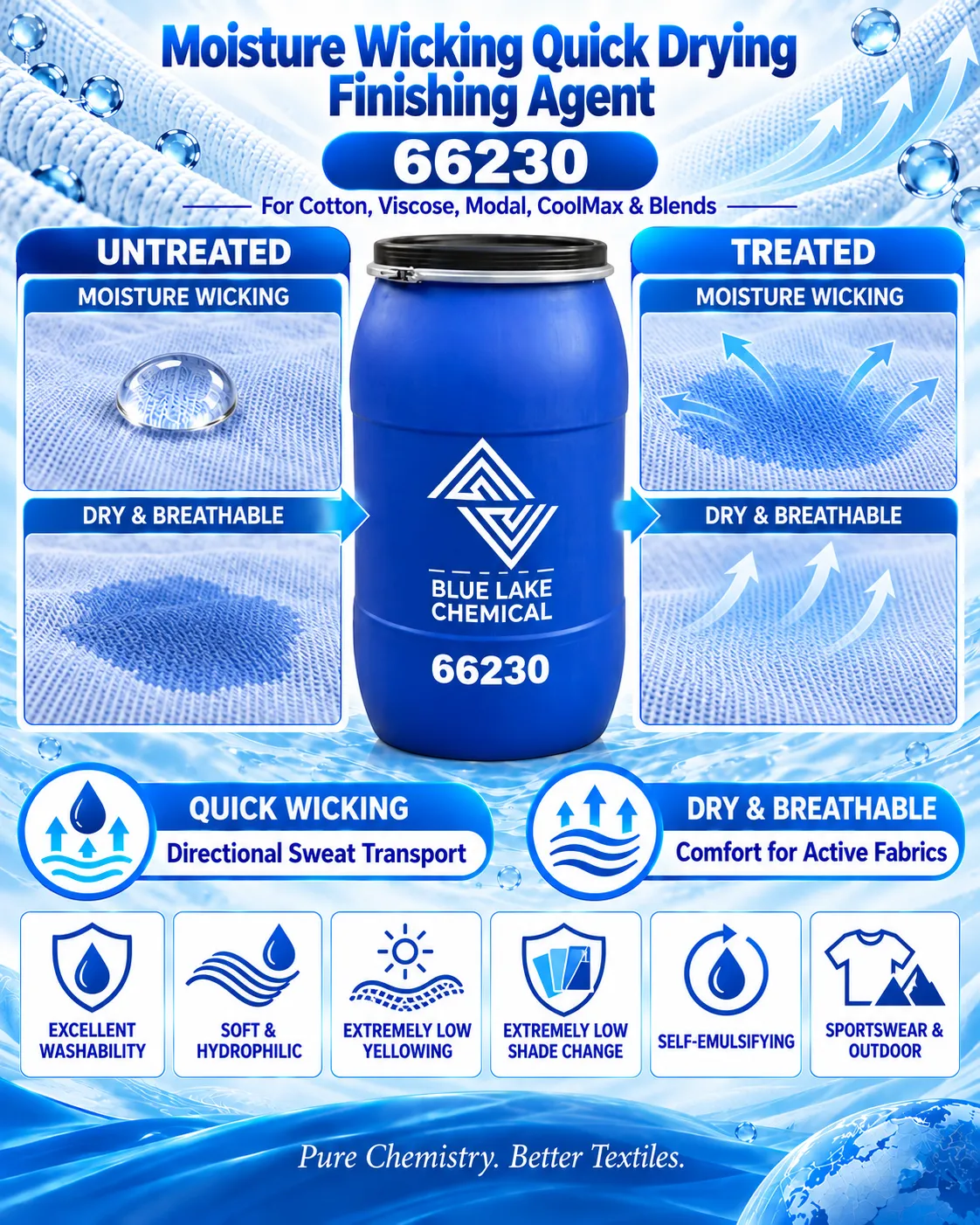
66230: Moisture-wicking and Quick-drying Finishing
66230 is a functional finishing agent with moisture wicking and quick drying.
The product information shows that this product is adopted a system combining special resin and silicone, which can provide durable and washable moisture wicking effect, and can also provide good handle. It can be made quick-drying test by controlling the dosage.
The main application includes:
Cellulose fibers, nylon and their blends.
Therefore, for functional textiles that require moisture wicking and quick-drying performance, 66230 test can be conducted according to actual fabrics.
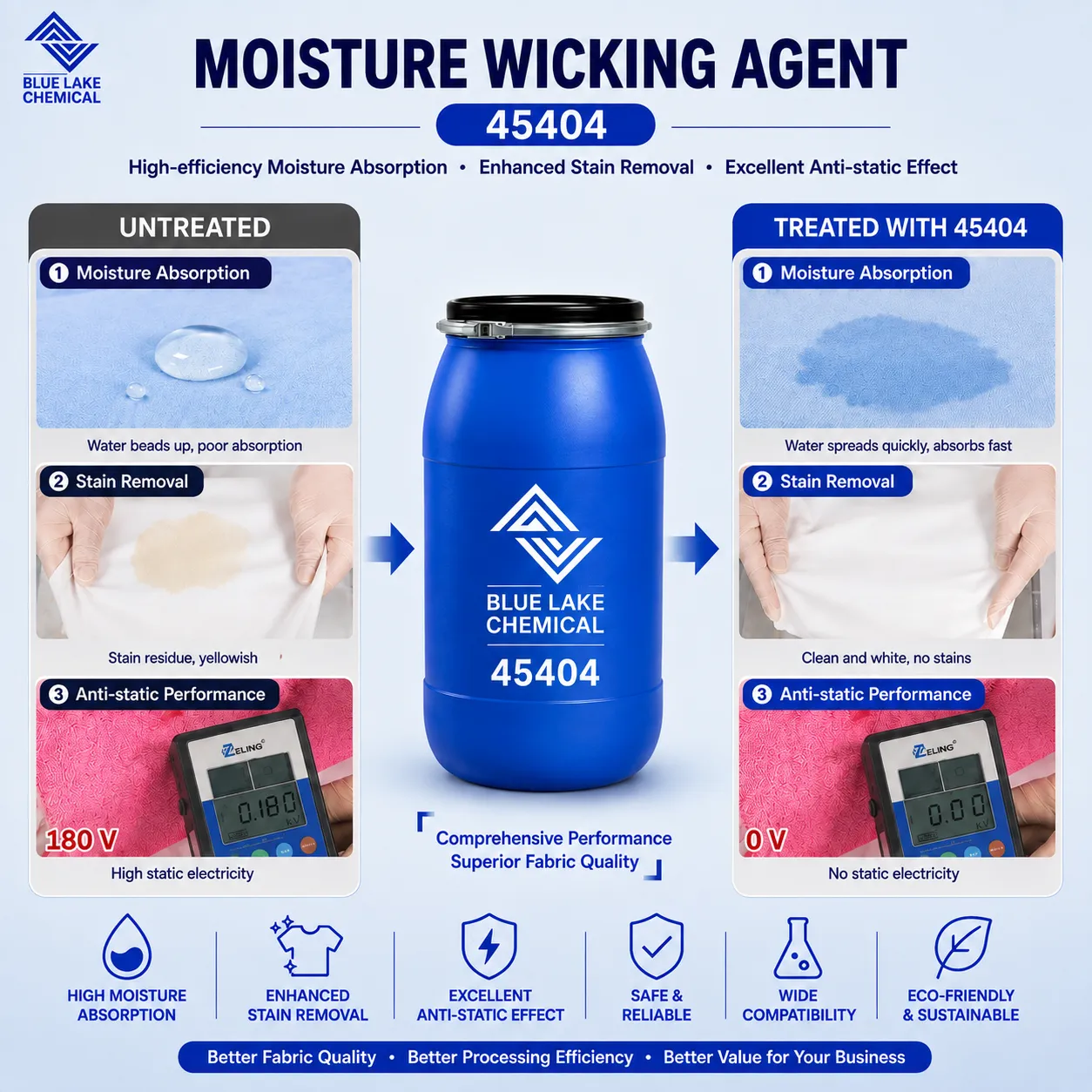
45404: Multi-functional Moisture Wicking Finishing of Polyester and Its Blends
45404 is mainly used for polyester and its blends.
From the product information, this product belongs to polyester ether multi-functional finishing agent. Its main functions include:
- moisture wicking
- anti-pilling
- anti-static
- easy to maintain and care
It is solid. It needs to be heated and diluted before used.
Therefore, for dyeing mills that mainly produce polyester and its blended fabrics and whose customers also pay attention to moisture wicking and other functional performances, they can make tests based on specific order requirements.
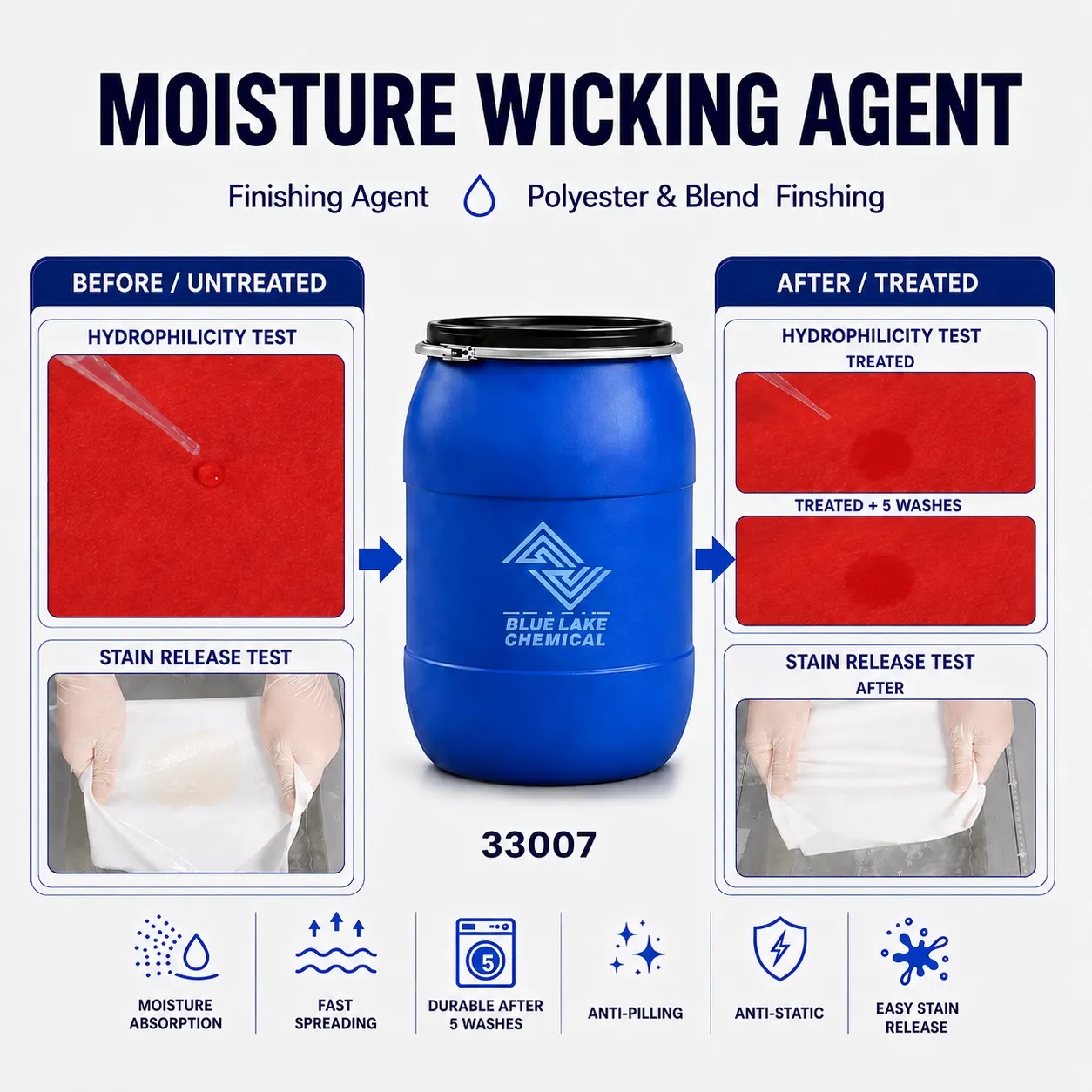
33007: Multi-functional Moisture Wicking Finishing of Polyester and Its Blends
33007 also belongs to moisture wicking agent for polyester and its blends.
Comparing with 45404, 33007 is paste state. And it is polyester ether multi-functional finishing agent.
The product data shows that its functions include:
- moisture wicking
- anti-pilling
- anti-static
- easy to maintain and care
Therefore, 33007 can be used as another product option in the moisture-wicking finishing system for polyester and its blended fabrics. In actual application, it can be tested according to factory’s existing equipment and product using methods.
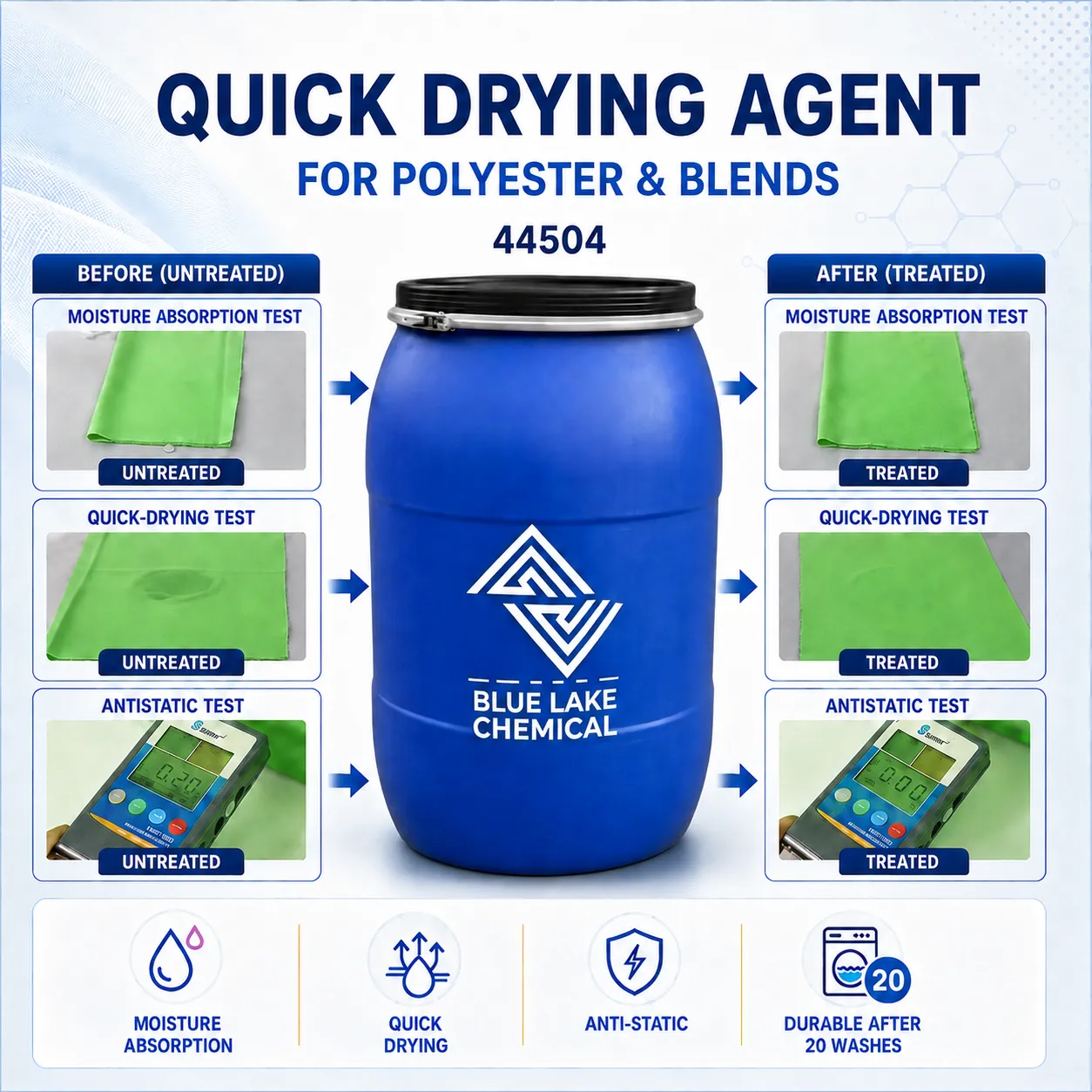
44504: Quick-drying Finishing of Polyester and Its Blends
445044 is mainly used for the finishing of polyester and its blends.
Different from 45404 and 33007 those are more outstanding in moisture-wicking and multi-functional finishing, the product data of 44504 is importantly emphasized the quick-drying function.
Therefore, if customers demand for improving the drying speed of polyester and its blends, but not pursuing multiple functions, they can pay more attention to 44504.
Solution Shifting from Single Functional Finishing Agent to Targeted Finishing
For dyeing mills, the selection of moisture wicking finishing agent is not simply comparing which product has more functions, but rather requiring matching based on the final use of the fabric.
For towels or other highly water-absorbing products, the key points may be instant hydrophilicity and rapid water absorption. For cellulose fibers and nylon, we can choose instant hydrophilic, durable hydrophilic or moisture-wicking products according to customers’ requirements. For polyester and its blends, it needs to further distinguish the different requirements of moisture wicking, multi-functional finishing and quick drying, etc.
Therefore, for different positions, their focuses are different.
Dyeing mills’ bosses:
Pay more attention to whether the products meet customers’ required functions, and the whole quality and production stability of functional finished fabrics.
Purchasing staff:
Need to pay attention to the applicable fibers, functional directions, product forms and actual using conditions of the product to avoid comparing merely based on the purchasing unit price.
Engineers in dyeing mills:
Need to test the hydrophilic speed, moisture wicking, quick drying, washability and the handle after finishing, and determine the appropriate product according to existing equipment and process.
Finally, whether the functional finishing agent is suitable for the fabrics, it still needs to test on actual fabric sample and production process.
BLUELAKECHEM: Provides Functional Finishing Solution to Global Textile Enterprises
ब्लूएलेकेम focuses on the research and development, production and application of textile chemical auxiliaries, providing कपड़ा रंगाई और finishing auxiliaries and application support for overseas dyeing mills, textile manufacturing enterprises, textile chemical traders and distributors.
In the field of functional finishing, BLUELAKECHEM has set up a product system including instant hydrophilic, durable hydrophilic, moisture-wicking, quick-drying and other functional finishing, that can provide corresponding product options for cellulose fibers, nylon, polyester and different blended fabrics.
If your customers are concerned about the water absorption speed of towels, the hydrophilicity of fabrics, the moisture wicking of sports fabrics, the quick drying of polyester fabrics or the durability of functional finishing, they can select the corresponding item product for testing based on the specific fabric and end requirements.
BLUELAKECHEM can provide sample for testing and product application support according to customers’ fabric type, production equipment, finishing process and specific function. By actual test on fabric sample, they can more accurately determine the matching degree between different functional finishing agents and fabrics as well as existing processes.