

For dyeing mills that produce polyester/cotton blended fabrics, the completion of dyeing does not mean that the color quality is completely stable. Especially in subsequent stentering, heat treatment and finished product processing, disperse dyes may sublimate, thereby affecting the color fastness of fabrics.
This problem is particularly worthy of attention for sensitive colors, such as bright red, black and blue, etc. Dyeing mills’ bosses care about whether the finished products can pass the customer inspection stably. The purchasing staff is concerned about the cost of auxiliaries and environmental compliance. Engineers, on the other hand, need to confront the practical technological problem of improving the final color fastness without altering handle or color shade of fabrics.
Therefore, for polyester/cotton fabric, a fixing agent that can help to decrease the sublimation effect of disperse dyes during stentering process, and can also take into account the fixing effect, production efficiency and environmental protection requirements, has high practical application value.
Why Do Polyester/Cotton Fabrics Tend to Have Color Fastness Problems After Stentering?
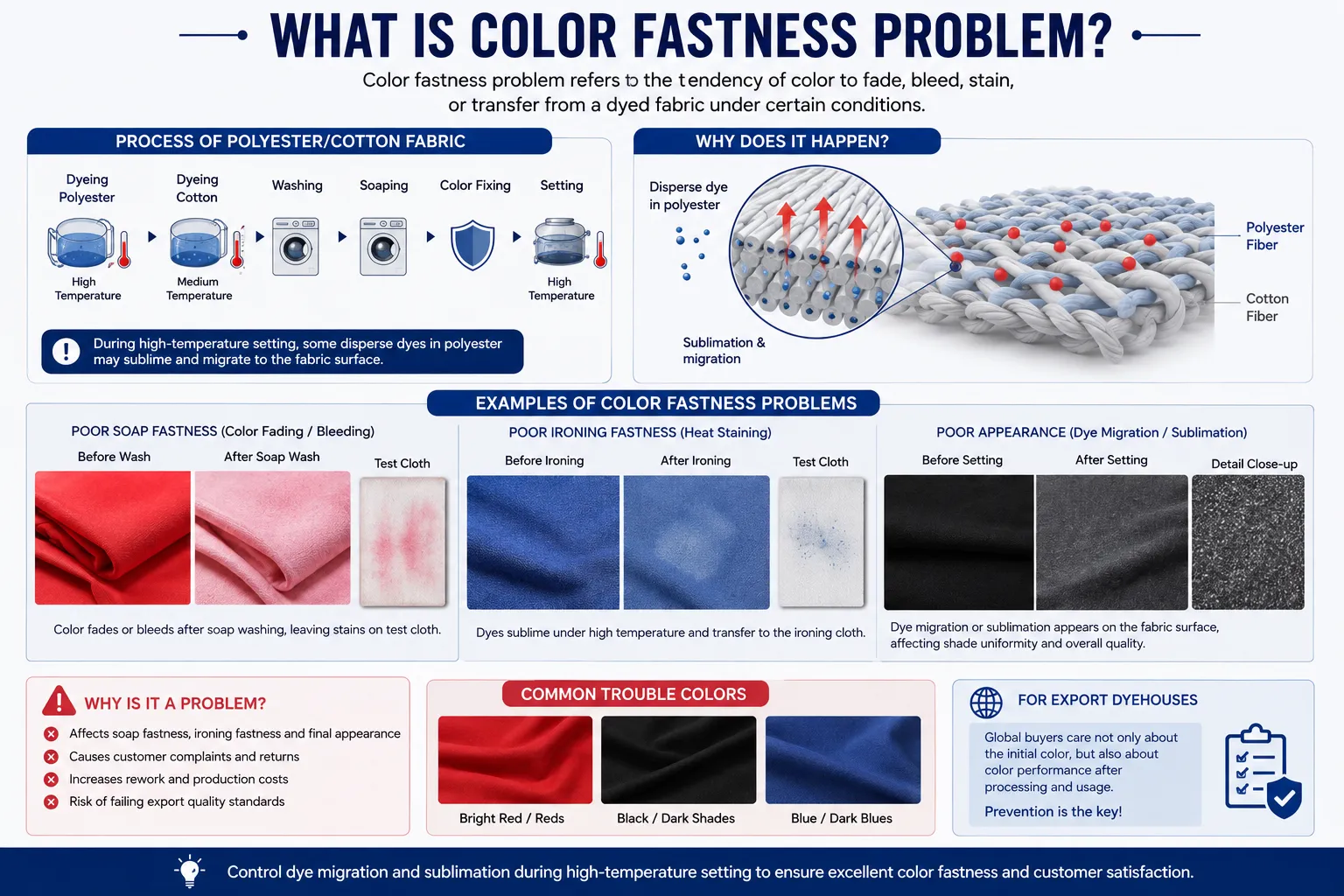
Polyester/cotton blended fabrics usually require separate dyeing of polyester fibers and cotton fibers, and following are subsequent processes such as water washing, soaping, fixing and stentering.
During the dyeing process of polyester components, disperse dyes need to enter polyester fibers at relatively high temperature. During subsequent processing, if the stentering temperature is relatively high, some disperse dyes may sublimate and re-migrate to the fabric surface.
Such changes may further affect the soaping color fastness, ironing color fastness and final appearance of the fabric.
Especially for dark or sensitive colors, such as bright red, black and blue, if there is dye migration or sublimation, it will not only affect the quality of finished product, but also may increase dyeing mills’ repair pressure.
For export-oriented dyeing mills, it is particularly necessary to control such problem in advance, because customers usually not only focus on the initial color but also pay attention to the color fastness performance after subsequent processing and use.
What the Dyeing Mills’ Bosses Care about Most Is Not Just Color Fastness
From a business perspective, choosing a fixing agent actually involves multiple aspects.
The first is the stability of finished product quality. If the color fastness of fabric decreases after stentering, it may need to be reprocessed, which will increase production time and energy consumption.
The second is the production efficiency. If traditional finishing process requires additional intermediate processing steps, it means more equipment occupation, manual operation and energy consumption.
The third is the product compatibility. If the fixing agent cannot be used together with existing softener or silicone oil, engineer may need to re-design the stentering process.
The last is environmental compliance. Overseas brands and textile supply chains are increasingly attaching importance to the environmental protection attribute of textile chemicals. The requirement of containing no formaldehyde or APEO has become an important consideration of many export orders.
Therefore, the fixing agent that is really suitable for mass production needs to be evaluated from multiple aspects such as color fastness, process efficiency, compatibility and environmental protection.
How Can Purchasing Staff Reduce the Pressure of Inventory and Management of Auxiliaries?
For the textile chemicals purchasing department, product price is only part of the purchasing decision.
If a fixing agent can only be used in a specific process and applied in a separate production step, the actual use-cost may be much higher than the purchase price of the product itself.
In contrast, if the fixing agent can be directly used in the existing stentering process and can be applied in the same bath together with silicone oil, additional process operations can be reduced.
That means that dyeing mills can apply it without making significant adjustments to their existing production processes, and can also reduce the complexity of process changing.
For dyeing mills producing polyester/cotton fabrics for long time, this ability to integrate processes has relatively obvious practical value.
The Core Problem That Engineers Face: How to Inhibit the Sublimation of Disperse Dyes?
From a technical perspective, the color fixing of polyester/cotton fabrics is not simply “fixing the color”.
During the stentering process, engineers need to take into account factors such as temperature, time, fabric structure and types of dye simultaneously.
Especially in bright red, black and blue, etc., the sublimation of disperse dyes may have a more obvious impact on the final color fastness. Therefore, the finishing system needs to minimize this impact as much as possible.
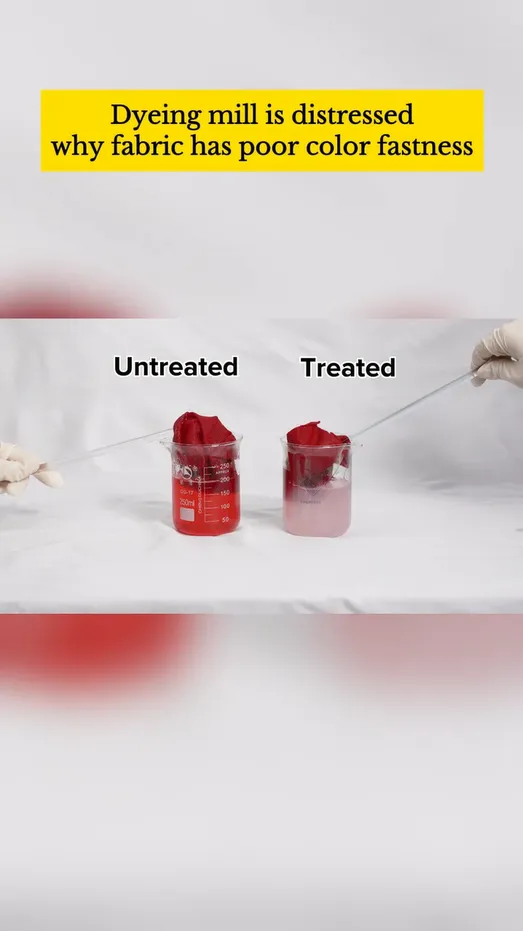
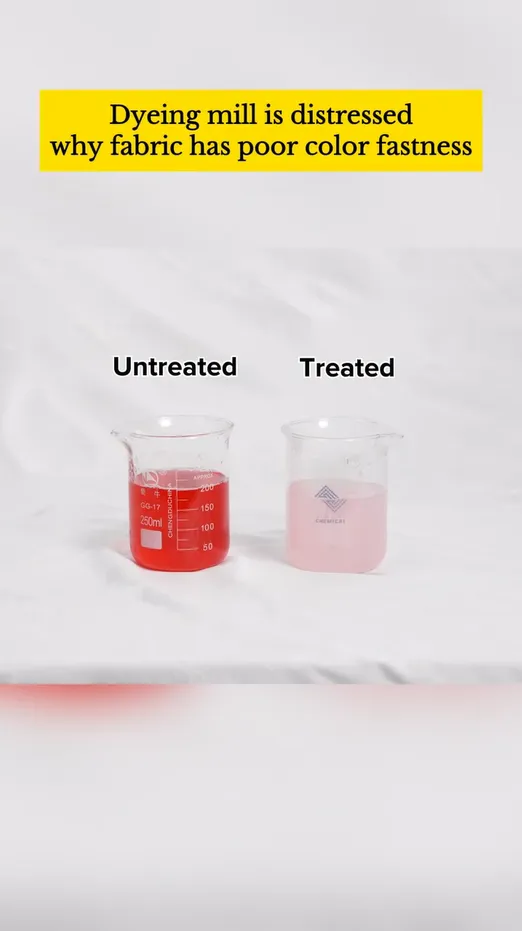
Aiming at this application requirement, the specialized fixing agent for polyester/cotton can form corresponding protective and color fixing effect during stentering process, thereby helping to reduce the impact of the sublimation of disperse dyes on color fastness.
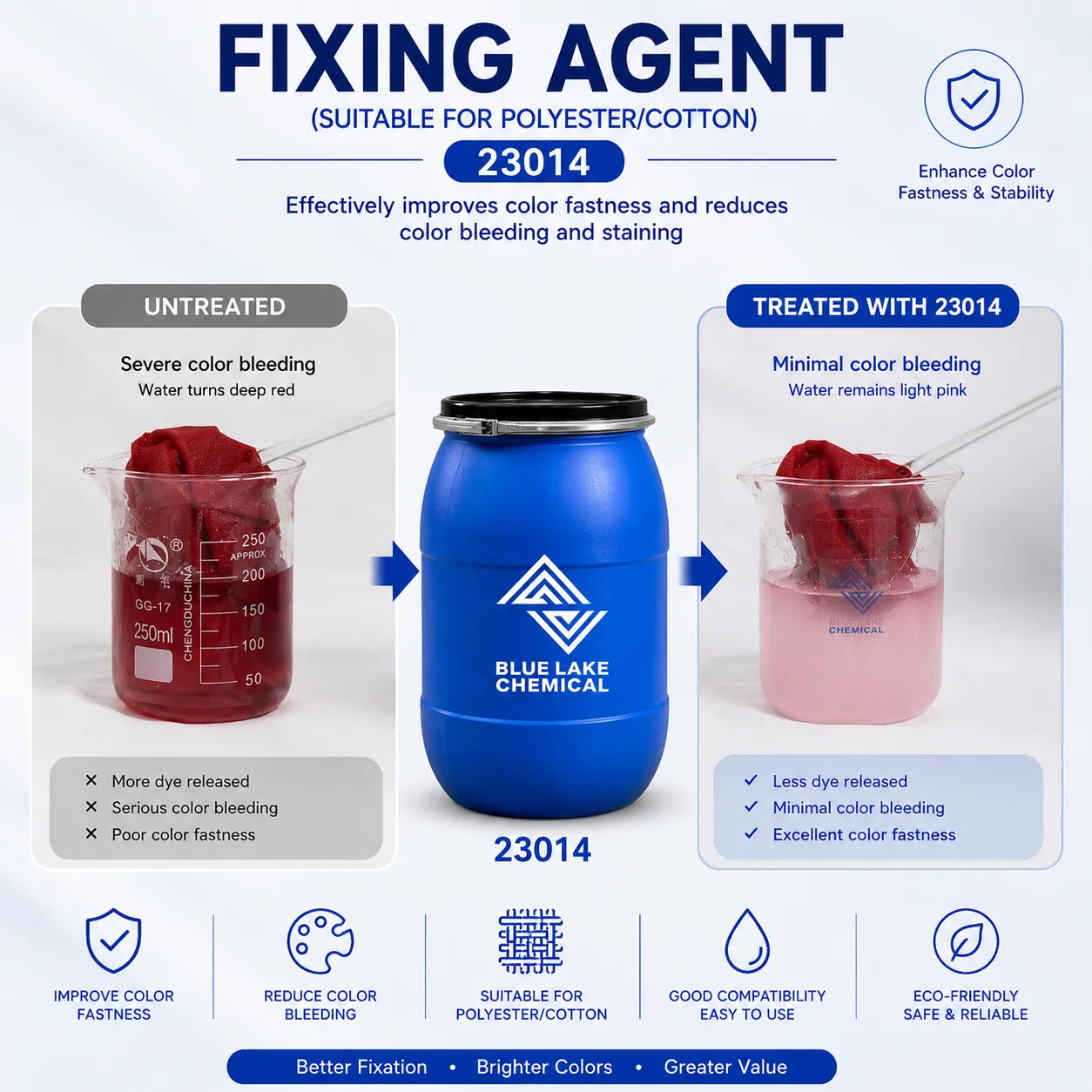
The technology data shows that 23014 is mainly composed of polyamine polymer. In the stentering process for polyester/cotton fabrics, it can react with hydroxide radical on cotton fibers and have autoreaction to crosslink to form a film, which can decrease the influence on fastness by sublimation of disperse dyes and improve the soaping color fastness and steam ironing color fastness.
This is of practical significance for production process that needs to balance the stability of polyester dyeing and the color fixing effect of cotton components.
Not Changing the Handle or Color of Fabric Is an Important Requirement for Fixing Agent
For high-quality textiles, the fixing effect should not come at the expense of the original style of fabric.
If the fixing agent obviously changes the handle of the fabric or causes uneven color and shade changing, engineers will need to readjust the formula, and it may even affect the customer’s acceptance of the final product.
Therefore, the ideal fixing agent should not only improve color fastness, but also try to maintain the original texture and color of the fabric as much as possible.
The product information of 23014 clearly indicates that this product will not affect the handle or color depth of the fabric.
For export orders of bright colors, dark colors and that those with strict requirements for color shade, this point is particularly worthy of attention.
Reduces Intermediate Process to Make Stentering Process More Efficient
In dyeing mills’ actual production, each additional process means an increase in equipment occupation, manual operation, energy consumption and quality control points.
If fixing process requires separate intermediate step, it will not only delay the production cycle, but also may reduce the rate of equipment utilization.
One application advantage of 23014 is that it can reduce one intermediate stentering, thereby shortening the overall production process. At the same time, this product can be used together with silicone oil in the same bath in stentering machine.
For dyeing mills that have already established mature stentering process, this “one-bath application” can reduce process adjustments and help to improve production efficiency.
Environmental Compliance Is Becoming More and More Important
For overseas dyeing mills and export-oriented textile enterprises, environmental protection requirements have become an indispensable factor when choosing a fixing agent.
Some traditional fixing system may involve formaldehyde, APEO or other chemicals of concern, which may increase export customers’ pressure of supply chain audit.
23014 contains no formaldehyde, APEO or heavy metal ions, which fits environmental protection requirements mentioned on product data.
For dyeing mills that serve international brand customers and export to Europe and other overseas markets, this environmental protection attribute can help enterprises to better meet customers’ requirements for the compliance of textile chemicals.
BLUELAKECHEM Fixing Agent 23014: Provides More Efficient Fixing Solution for Stentering of Polyester/Cotton
Overall, for polyester/cotton fabrics, the value of fixing agent lies not only in improving color fastness, but also in inhibiting the sublimation of disperse dyes, maintaining the handle and color of fabrics, simplifying the production process, and ensuring environmental compliance.
BLUELAKECHEM Fixing Agent 23014 is mainly composed of polyamine polymer, which is developed specifically for the stentering application of polyester/cotton fabrics. In the stentering process, it can react with relevant groups on cotton fibers and form a film, which can decrease the influence on fastness by sublimation of disperse dyes and improve the soaping color fastness and steam ironing color fastness.
In the application performance, 23014 contains no formaldehyde, APEO or heavy metal ions. It has certain inhibiting effect on sublimation of disperse dyes in stentering process, especially showing good application pertinence on bright red, black and blue dyes. At the same time, it will not affect the handle and color depth of fabrics.
In process, 23014 can be used with silicone oil in the same bath in stentering machine, which helps to reduce one intermediate stentering step and shorten the production process. The reference process for padding process is 10~50 g/L. Pickup is 70~100%. Stentering temperature is 130~160℃. The actual production parameters should be tested and confirmed according to the conditions of fabric and equipment.
BLUELAKECHEM has been focusing on textile auxiliaries and textile chemicals solutions, serving overseas dyeing mills, textile mills and textile chemicals distributors. Our products cover multiple applications, as pretreatment, dyeing, fixing, soft finishing and functional finishing, etc. By integrating actual production demands, BLUELAKECHEM is committed to helping textile enterprises to better balance color fastness, production efficiency, process stability and environmental compliance. For polyester/cotton fabrics and bright red, black and blue products that have high requirements for sublimation fastness, 23014 can be used as an application test option in the existing color fixing system.