

In the modern textile manufacturing system, dyeing process not only determines the appearance effect of the product, but also directly affects the color fastness, re-colorability, production cost and environmental compliance level. For overseas dyeing mills, weaving factories and textile chemical distributors, a thorough understanding of the dyeing process and its critical control points is the core foundation for improving product stability and market competitiveness.
The Essence and Core Objective of Dyeing
The essence of dyeing is to enable dye molecules to enter the interior of fibers and form stable combinations under specific conditions through physical adsorption and chemical combination.
A high-quality dyeing usually should meet the following core objectives:
- Bright and even color.
- Controllable color difference among batches.
- Good washing fastness and rubbing fastness.
- Improved first-passyield.
- Low energy consumption and low wastewater load.
To achieve these objectives, it needs to start from fiber structure and selection of dyes.
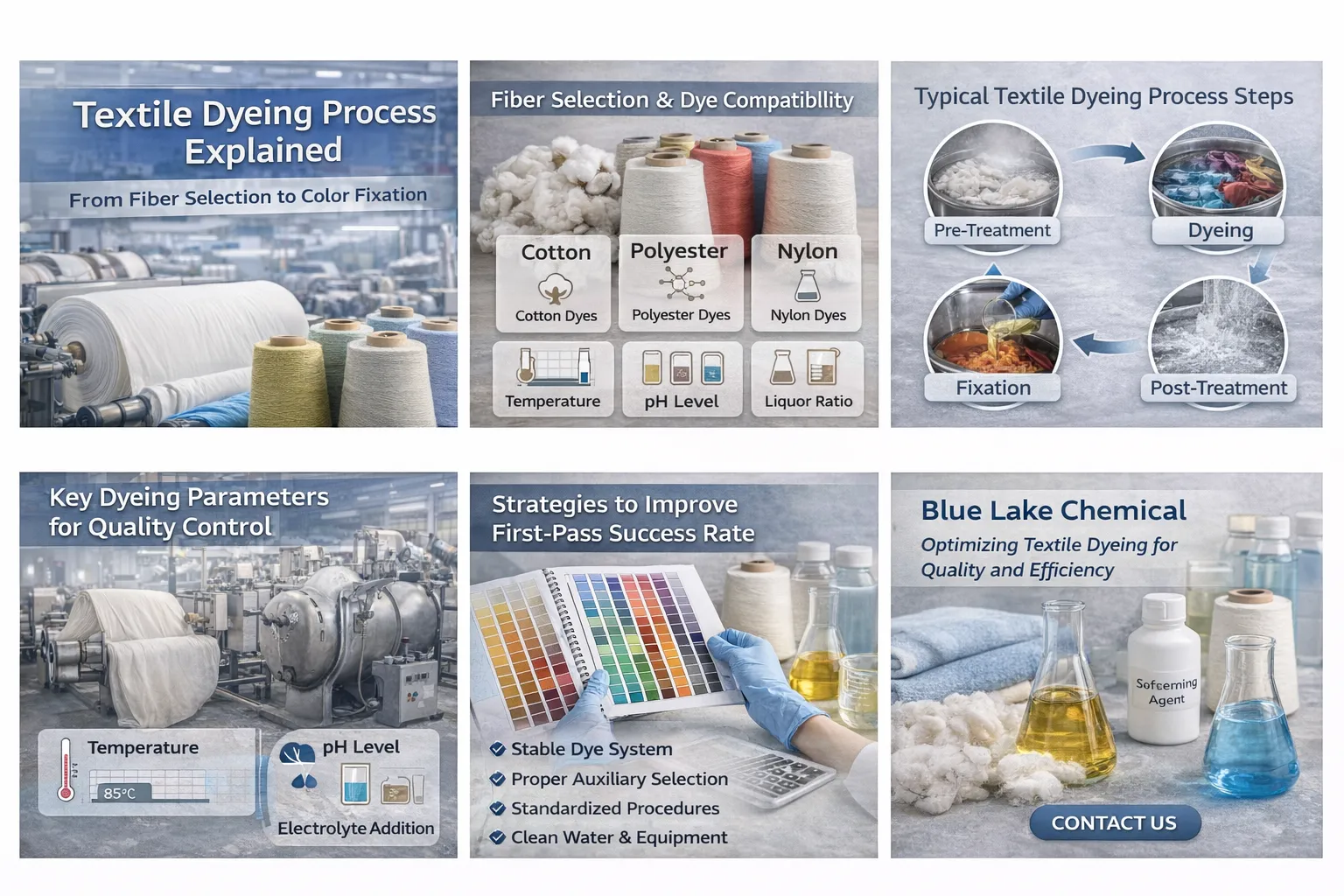
Dyeing Differences among Different Fibers
1. তুলা and cellulose fibers
Cotton fiber has a large number of hydroxyl structures, which is usually dyed by reactive dyes. Reactive dyes can combine with fibers through covalent bonds to achieve excellent color fastness. But it is necessary to precisely control the salt dosage, alkali concentration and temperature curve.
Critical control points include:
- Adding salt in batches.
- Slowly adding alkali.
- Control of temperature gradient.
- Thorough soaping to remove surface dyeing.
2. পলিয়েস্টার
Polyester is a hydrophobic fiber, which is dyed mainly by disperse dyes under high-temperature and high-pressure conditions (approximately 130℃). The dyeing process relies on the thermal diffusion of dyes into the interior of fibers.
Critical control points include:
- Stability of disperse system.
- Heating rate.
- Time of heat preservation.
- Control of cooling curve.
3. নাইলন
Nylon is mainly dyed by acid dyes. During dyeing process, it needs to control the pH to drop slowly to avoid too fast dyeing causing dyeing defect.
4. Blended fabrics
Blended fabrics, such as polyester/cotton and nylon/cotton, etc. are usually dyed by step-by-step dyeing or one bath two stage process. These processes are complicated, which have higher requirements for compatibility of auxiliaries and process control capabilities.
Disassembly of Typical Dyeing Process
A standard dyeing of fabrics generally includes following stages:
The first stage: preprocessing
To ensure the cleanliness of fabrics and evenness of color absorption.
The second stage: রঞ্জনবিদ্যা
To control the temperature, pH and time, so as to make the dyes gradually diffuse into fibers.
The third stage: fixing
To promote the stable combination of dyes and fibers by heating or adding alkali.
The fourth stage: post processing
Soaping, neutralizing and water washing. To improve color fastness and cleanliness.
The stability of dyeing quality is often depends on the following parameters:
- Whether the heating curve is stable.
- Whether the pH change is controllable.
- Whether the adding of electrolytes is reasonable.
- Whether the bath ratio matches the equipment.
Any fluctuation in any link may cause color difference or fastness problems.
Strategies for Increasing the First-Passyield of Dyeing
For commercial dyeing mills, the first-passyield directly affects the profit margin. The key to increase first-passyield lies in:
- Choosing stable dyes system.
- Amatching combination of auxiliaries.
- Standardized operation procedure.
- Strictly controlling the hardness of water quality.
- Keeping clean equipment and stable circulation.
Systematical management is far more effective than single adjustment.
The Importance of Professional Auxiliary Supplier
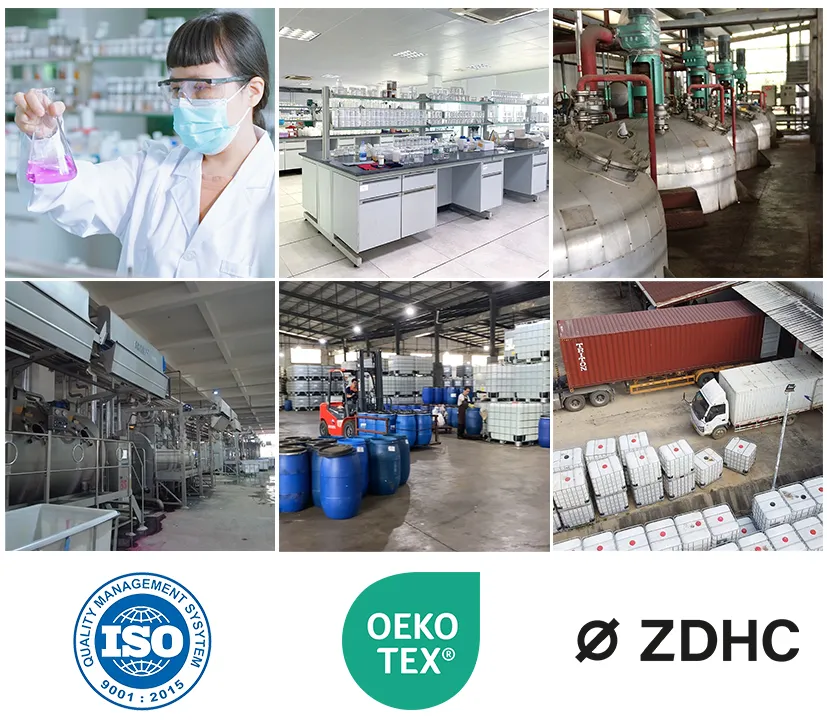
As an enterprise focusing on researching, developing and manufacturing টেক্সটাইল সহায়ক, ব্লুয়েলাকেচেম is always committed to providing global dyeing mills and textile enterprises with stable and high-efficiency dyeing solutions. We have a complete product system covering প্রাক-চিকিৎসা, রঞ্জনবিদ্যা, functional সমাপ্তি, silicone oil এবং সফটনার. We can provide systematic supporting solutions for different fibers (cotton, polyester, nylon and blends) and different equipment conditions.
For dyeing process, we can provide the key auxiliaries, such as dispersing agent, সমতলকরণ এজেন্ট, soaping agent, fixing agent এবং wetting agent, etc., as well as combine the actual production conditions to provide technical suggestions and application support, so as to help customers increase
first-passyield, decrease risk of reworking and optimize the comprehensive production cost.
We believe that stable product quality and processional technical support is the foundation of long-term cooperation. If you want to optimize the current dyeing process or develop a more competitive product system, welcome to contact with us.